

Car Mileage Meaning and How to Read it in Nigerian Cars article content
Why is the idea of a perfect car to Nigerians a fresh Toyota Tokunbo with 45,023 km mileage?
Tell a car buyer a vehicle's mileage is 220,000 km and they'll instantly mark you as a red flag for life; they'll even point your shop to their friends and warn them never to use your services.
See, you can never convince many Nigerians to get a six-digit mileage unless you're planning to dry your salivary glands. Many don't realize that low mileage doesn't mean you're buying a good car, and high mileage doesn't mean it's a bad one.
As a matter of fact, your vendor knows you'll not take the high mileage vehicle so he illegally alters the odometer and reduces it to make you think you're getting value for your money.
So before you celebrate that "low mileage" Tokunbo car, ask yourself: Would you rather own a car with lesser mileage... or one that has been properly taken care of?
In this guide, you'll learn:
What a car mileage means
What is considered good mileage for a car
How car mileage affects fuel efficiency and performance
How to check mileage before buying used cars
Signs that mileage has been tampered with
How to read mileage correctly
High mileage or low mileage: which should you buy?
Common misconceptions about low mileage among Nigerian car buyers
What Is Car Mileage?
Car mileage is the total distance a vehicle has travelled since it was manufactured. It is measured with the vehicle's odometer, a built-in instrument that records every kilometre (km) or mile (ml) driven. The odometer is located on your vehicle's dashboard, directly behind the steering wheel where you also see your speedometer, fuel gauge, engine temperature gauge, and warning lights.
Car mileage is important for all types of vehicles, including brand-new cars, Tokunbo vehicles, and Nigerian-used cars. It is most critical when buying a used car because it helps determine the vehicle's condition, maintenance needs, and market value.
What is a Good Mileage for a Car?
While there's no universal rate to check a vehicle's Mileage, here's a simple guide to understanding them.
Under 30,000 km
This is considered very low mileage and ideal if the vehicle is still new, however, make sure to properly inspect for accident damage, flood damage, a faulty odometer, or if the meter has been tampered with.
30,000–80,000 km
This is considered low mileage and should feel almost new if maintained properly.
80,000–150,000 km
This is an average mileage for many used vehicles. If a vehicle falls in this range, focus on:
• maintenance records
• engine condition
• transmission performance
• suspension
• brake system
Above 150,000 km
Now this is the part where your mechanic will do everything in his power to convince you to buy this vehicle if it has been maintained properly but most people immediately walk away.
Some Toyota, Honda, and Hyundai engines can comfortably exceed 300,000 km but they require preventative maintenance and routine performance checks.
How Car Mileage Affects Fuel Efficiency and Performance
Occasionally, Nigerian car owners tend to confuse car mileage with fuel mileage or fuel efficiency, however, these two are different.
Car mileage refers to the total distance a vehicle has travelled over its lifetime.
Fuel efficiency (fuel mileage) refers to how far a car can travel using a litre of fuel. It is measured in kilometres per litre (km/L) or litres per 100 kilometres (L/100 km).
As a vehicle's mileage increases, engine wear, poor maintenance, worn tyres, and ageing components can reduce its fuel efficiency, which is why keeping up with regular servicing helps maintain both your vehicle's performance and its fuel economy.
How to Check a Car's Mileage Before Buying Used Cars
Since the genesis of automotive faults, there’s been an increased rate of odometer fraud where sellers illegally reduce the displayed mileage for used cars in the market. Here are some ways to verify a vehicle's true condition:
1. Inspect the Interior
A car showing 40,000 km shouldn't have:
• a heavily worn steering wheel
• smooth or faded pedals
• torn driver's seat
• loose gear knob
And vice versa for the car with high mileage and neat interiors. If those signs don't match the displayed mileage, investigate further.
2. Check for laps in the vehicle service history.
If the figures suddenly jump backward or have large gaps, ask questions. If the service history cannot be accounted for, run.
3. Check the VIN.
For imported Tokunbo vehicles, check the vehicle identification number (VIN) through report services such as WHIPCARE. These reports reveal recorded mileage from inspections to registrations, helping you spot red flags before your next buy.
4. Ask a Trusted Mechanic to estimate.
Check if the wear on the engine, suspension, brakes, and interior matches the odometer reading.
High-Mileage vs. Low-Mileage Cars: Which Should You Buy?
A well-maintained high-mileage vehicle is possibly a better investment than a poorly maintained low-mileage vehicle. Always consider the car's service history, overall condition, and maintenance records before making your decision.
Choose a Low-Mileage Car If:
• It has a verified service history.
• It has not been involved in major accidents.
• The mileage is genuine.
• The car has been driven regularly and maintained properly.
A High-Mileage Car Can Still Be a Great Buy If:
• It has complete maintenance records.
• The engine and transmission are healthy.
• It was mostly driven on highways.
• It has been serviced with quality parts and fluids.
How to Read Mileage Correctly
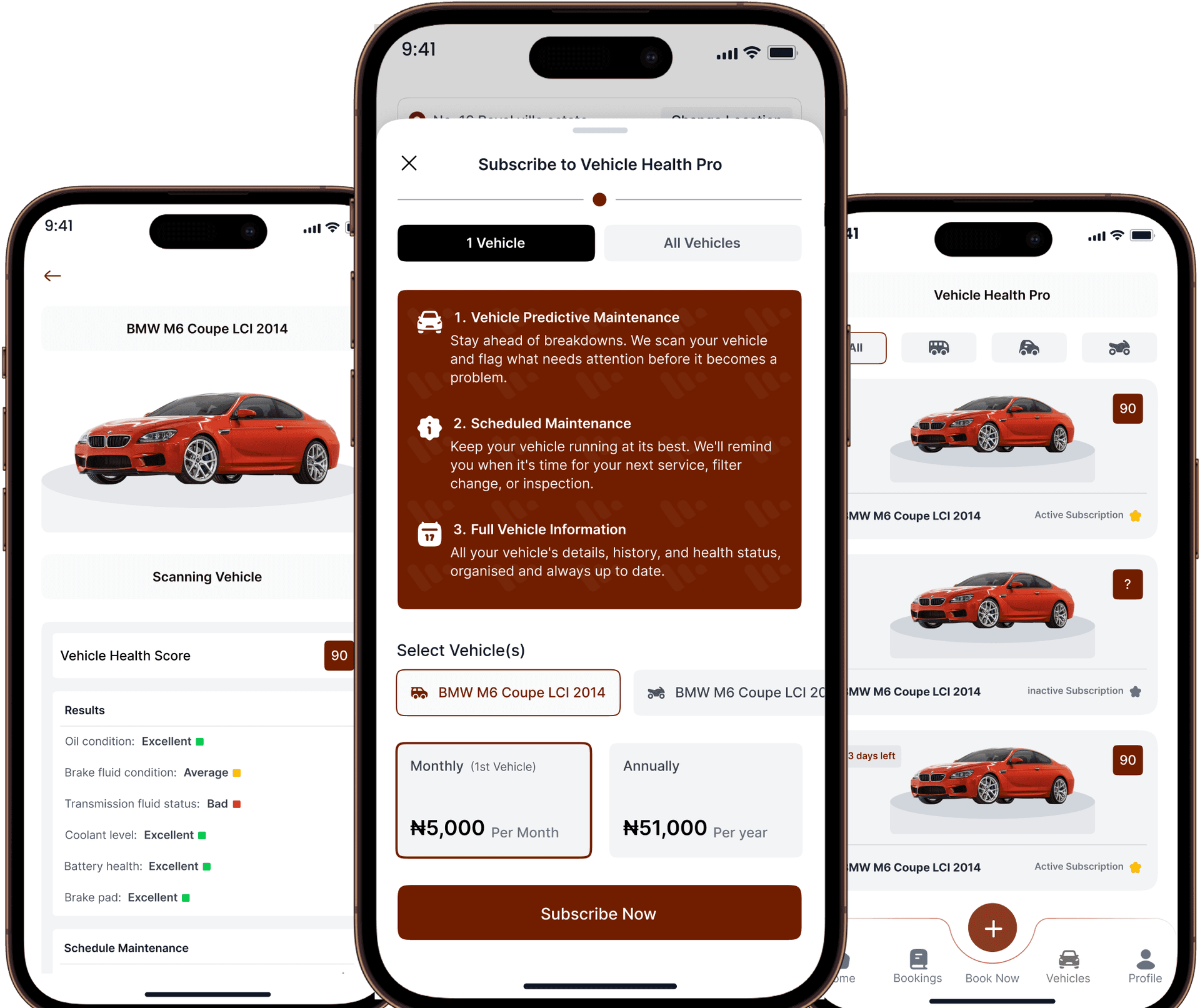
To read a car mileage the right way, download Whipcare now. Whipcare is Nigeria’s leading vehicle health app where your car’s history including oil checks, Mileage, never disappears.
Common Misconceptions About Low Mileage Among Nigerian Car Buyers
If you've searched for cars online, you've probably seen listings like:
• "Super clean Tokunbo"
• "First body"
• "Nothing to fix"
• "Only 42,000 km"
The mileage is usually advertised like it's the biggest selling point because Nigerian buyers naturally assume:
• lower mileage equals less wear
• fewer repairs
• longer engine life
• better resale value
Mileage gives Nigerian buyers an idea of how much a car has been used but what it doesn't tell you is:
• if the engine was serviced regularly
• whether the gearbox is healthy
• if the suspension has suffered from bad roads
• whether flood water entered the vehicle
• if the owner abused the engine
Frequently Asked Questions(FAQ)
These are some of the most common questions Nigerian drivers ask before buying or maintaining a car.
1. How do I check my car’s mileage?
Turn on your ignition and look at the odometer on your dashboard. Modern cars display the mileage digitally, while older vehicles may have an analogue odometer.
2. Is high mileage always bad?
No. A car with 180,000 km that has been serviced regularly can be a better purchase than one with 60,000 km that has been neglected. Always inspect the car’s maintenance history, not just its mileage.
3. Can a car’s mileage be changed?
Unfortunately, yes. Some dishonest sellers tamper with the odometer to make a car appear less used. This is why you should compare the mileage with the vehicle’s service records and overall condition through a VIN history report.
4. Does fuel affect car mileage?
Not really. Fuel quality affects fuel economy (how far your car travels per litre), but it does not change the total distance recorded on the odometer.
5. Does idling increase mileage?
No. When your engine is running but the car isn’t moving, the odometer doesn’t increase because the vehicle isn’t covering any distance. However, idling still burns fuel and contributes to engine wear.
6. Should I buy a car with over 200,000 km?
It depends. If the components and service history are all in excellent condition, it can still be a reliable purchase.
7. What’s more important: mileage or maintenance?
Maintenance. A well-maintained vehicle with higher mileage is most likely a smarter investment than a neglected car with low mileage.
Final Thoughts
The next time you’re shopping for a Tokunbo or Nigerian-used car, do not let low mileage blind you. Ask questions, inspect the vehicle, request service records, & bring a trusted mechanic on Whipcare, a vehicle health platform that securely saves all service records, receipts, repairs, and conversations with your mechanic. Find us on app store and google store today. With Whipcare, nothing disappears.